Onboarding
It doesn’t have to be scary.
I didn’t realize how big a struggle this can be until I saw this topic come up over and over in my work with indie developers.
They understand its importance, sure, but I’ve heard through dozens of conversations with studio founders, heads of games and creative leaders, that onboarding is still shrouded in confusion and indecision.
The questions I get the most often are along the lines of “When do you onboard the player?”, “How much is too much?”, “Do we feed players through the firehose, or let them figure it out?”.
The unfortunate side-effect of this confusions is developers actually SKIPPING onboarding altogether, leaving players confused and the potential of their games unrealized.
I’ll offer this perspective;
maybe it’ll help you and your team overcome some of the paralysis you’re feeling around the onboarding of your game.
Onboarding is NOT about teaching players mechanics or controls.
Onboarding is exposing the rules of the world you built!
Imagine your player is loaded into a pitch black room where they can't see anything.
Not even their own hands. All they can hear is their own breath and footsteps.
How would you teach this player that they can jump?
But also that holding jump longer makes them jump higher?
That jumping saps stamina?
That you take fall damage if you jump off an object more than 6 feet high?
These are all rules in your game, that the player needs to be aware of.
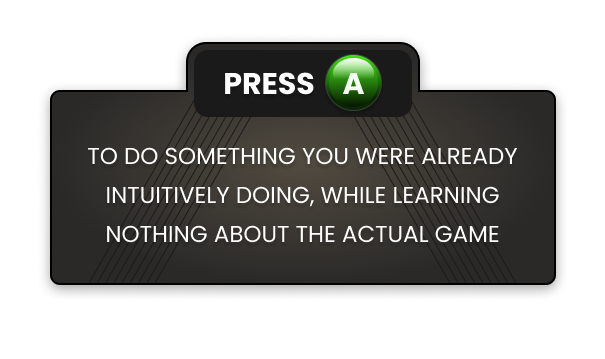
Does adding a gameplay interrupting pop-up that says “Press A to Jump” really do the job?
See, onboarding is not a buffet.
You don't want every dish blending into the next one, with no time to savour them and taste what makes them special. One dish should open the palate to the next one; not confuse and desensitize with sheer volume.

Onboarding is a multicourse meal.
Each dish served on its own plate, with its own utensils. More importantly, it has its own moment to be savoured. To be manipulated with the correct utensils which have been provided. It has a real chance to make an impression, and to become a delicious memory or highlight of the meal.
Classy, elegant.

Let’s go back to that jumping example.
Onboarding a player to a jump mechanic is more than telling them which button to press.
The players needs to learn the rules around jumping and how it relates to the rest of the game.
How high can I jump?
Can I double jump?
Can I chain many jumps?
Does jumping drain a resource?
Can I upgrade my jump?
Can I jump during combat?
Can I attack while I jump?
Can I be hurt while I jump?
Can I jump in cut scenes?
Do I alert enemies when I jump?
Do I alert enemies when I land?
Will I take damage when jumping off things?
What's the threshold for taking fall damage?
Will I die from fall damage?
Will I lose loot if I die in this game?
Will I be able to restart from a save if I lose my loot?
Did you notice?
These start off being about a jumping, but quickly become a way for the player to understand the game itself,
and the rules of the world you built.
My take on onboarding:
Its how a player starts to understand the boundaries and quirks of your game.
If they die from fall damage and lose all their loot, it paints the game as a more punishing roguelike game, VS a more casual action adventure.
This is important information, which you’ve just told the player through a freaking jump mechanic.
Bravo, Well played!
My 4-Step Framework for Game Mechanic onboarding
So my recommendation to the leadership of indie studios who I work with more often than not is:
1. Show it in action.
Expose a mechanic to a player by first letting them see it in action give the player time to see it in action.
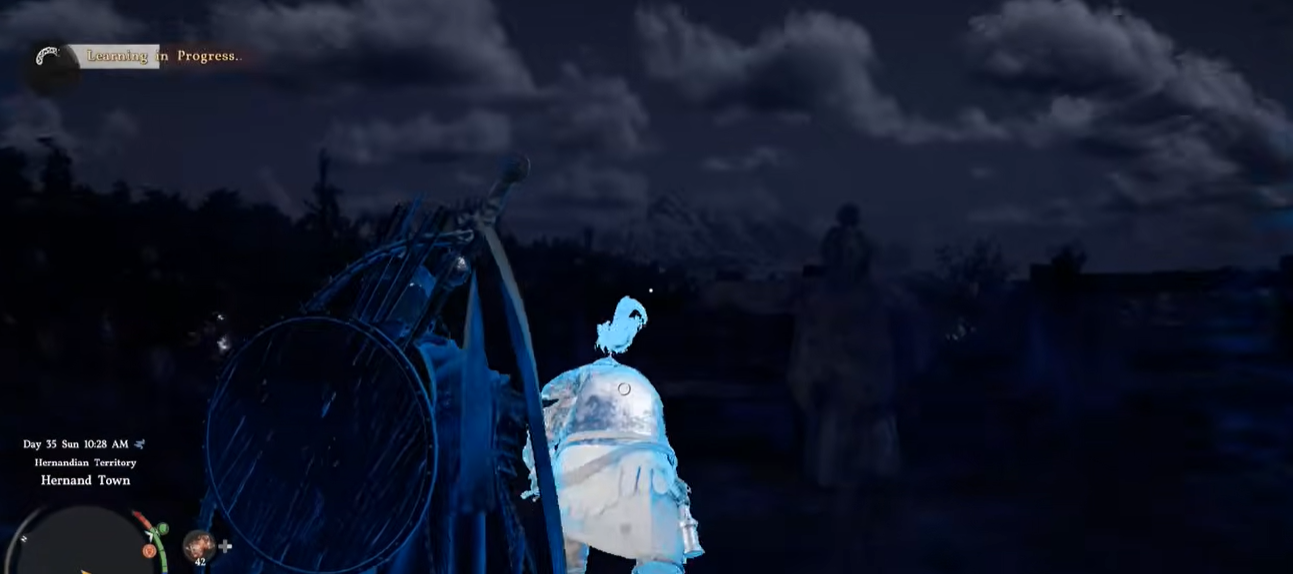
Actually Crimson Desert does this in a really cool way; you can learn new skills by watching NPCs perform them. Then you’re prompted to try the move. I like that.
2. Let them try it, safely.
Next, let players try the new mechanic in a non punishing or dangerous situation.
If they are learning to jump, let them have a soft landing if they don’t clear the gap.
3. Up the stakes; add some risk.
Let them experiment. Introduce some danger or pressure.
Missing the next jump costs something now, maybe damage, maybe a fail state that resets to a checkpoint. Early enough that they don't lose loot. This is where they learn falling can hurt, and that a checkpoint catches them.
4. Allow some finesse.
Finally, Once they've used the mechanic a few times, teach them that holding the button longer means a higher jump. Let the mechanic open the door to more advanced control.
If you’re stuck on the intimidating topic of onboarding in your own game, I hope this helped a bit.
FAQ: Game Onboarding Questions I Get Most Often
When should you onboard the player?
Just before, or when you plan to introduce new information. Whether its narrative, mechanical or experiential.
Teach jumping when there's something to jump over, not in a menu tutorial before the player has touched the world.
How much onboarding is too much?
If you're teaching mechanics your player won't use for another ten hours, that's too much. Match the pace of teaching to the pace of need.
One mechanic should create expectant space for the next one. Master of the first mechanic, benefit the new mechanic.
Should I use pop-ups to teach mechanics?
Popups have ONE purpose:
Interrupt flow state and jar the user to pay attention.
Do you really want your player to break immersion every time you have something new to show them?
A pop-up like "Press A to Jump" tells the player which button to press, but not the rules around it: cost, risk, or what it unlocks. Use demonstration and low-stakes practice instead.
What's the difference between teaching mechanics and teaching rules?
A mechanic is the prompt, input and outcome; like pressing a button to jump.
A rule is everything that input reveals about your world: stamina cost, fall damage, whether death means losing loot. Players remember these rules as they are learned contextually through actions.
What's a good framework for pacing onboarding?
Show the mechanic in action, let the player try it risk-free, introduce real risk, then provide space to experiment so the player can gain mastery
Repeat per mechanic.
This is covered in detail above.